

Summit of Excellence - Getting Started
Starting Your Family Tree: First Steps for Successful Genealogy Research - Alina Khuda
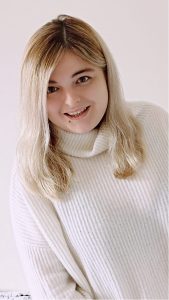
Alina is recognized for her expertise in Eastern European genealogical sources, including Jewish Galician, Orthodox, Greek Catholic, Old Believer, Lutheran, and Mennonite records. She has contributed research for government and non-government organizations and has served as a genealogy expert in criminal and probate cases in the United States. In addition to client work, she has experience in journalism and education, serving as a course editor and lecturer for genealogical training programs.
An active member of the Association of Professional Genealogists and other professional organizations, Alina presents internationally on methodology, archives, and Eastern European research strategies. Her work focuses on bridging historical records, legal documentation, and migration history to help families and institutions reconstruct connections across borders and generations.
Bringing Your Ancestors to Life: Going Beyond the Facts - Karen A. Fortin

What Did You Just Find? Evaluating Sources and Evidence with Confidence - Cheri Hudson Passey

Cheri Hudson Passey is a professional genealogist, instructor, writer, speaker, and owner of Carolina Girl Genealogy, LLC. She hosts the YouTube genealogy chat show GenFriends and is a genealogical researcher subcontracted by Eagle Investigative Services, Inc., for the US Army Past Conflict Repatriations Branch. She is involved in numerous genealogy societies and organizations and serves on the board of the National Genealogical Society. Cheri writes the blog “Carolina Girl Genealogy,” sharing her genealogy tips, methodologies, family stories, and research adventures, and is the author of “Genealogy in Reverse: Finding the Living. A Practical Guide for All Genealogists.
Organizing Your Digital Files-Apps and Tips for Your Phone & Laptop - Cynthia K Patton
Whether you use your smart phone or laptop/tablet there are a multitude of apps and programs to make your genealogy research easier. There are applications to scan, decipher, translate, enhance and restore photos, and even take notes. Using your phone’s GPS can help you locate and preserve information about ancestor grave sites. Using the 3 C’s – color, consistency, and naming conventions along with your new arsenal of apps—you will learn how to tackle the tasks and regain control of your digital files. We will explore cloud storage options, redundant backups, and provide many examples of best practices in organization.
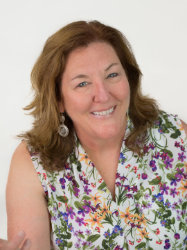
Cynthia Keefer Patton is a professional genealogist from Kansas City, Missouri, a member of the Heartland Chapter of the Association of Professional Genealogists (APG), and Registrar for the White Alloe Chapter, DAR. She is a BU Certification Program graduate. Cynthia retired from the US Army and has degrees in both Journalism and Political Science. She has presented for numerous historical, genealogical, and civic organizations and focuses on lineage society and military research, organization, and time management for genealogists.
Cousins, Clusters, and Chromosomes: Making Sense of Your DNA Matches - Paula Williams
Among our many DNA matches are puzzles, gems, and a lot of confusion. We’ll talk about ways to work through our matches and learn more about them and how they can help our family history.
Paula is a professional genealogist who has been researching for more than two decades in primarily southern US states and has been using DNA to solve problems for more than a decade. She has studied at IGHR, SLIG, GRIP, and the Genealogical Institute on Federal Records (Gen-Fed). In addition, she’s a board member of the Virginia Genealogical Society and of the Genealogical Research Institute of Virginia (GRIVA) and is the facilitator for the latter’s DNA Special Interest Group. She has taught at the IGHR and GRIP institutes and has lectured for Legacy Family Tree Webinars, RootsTech, the East Coast Genetic Genealogy Conference, and for the National Genealogical Society conference, among other organizations. She also serves as the Virtual Tech Coordinator for the GRIP Genealogy Institute.
